
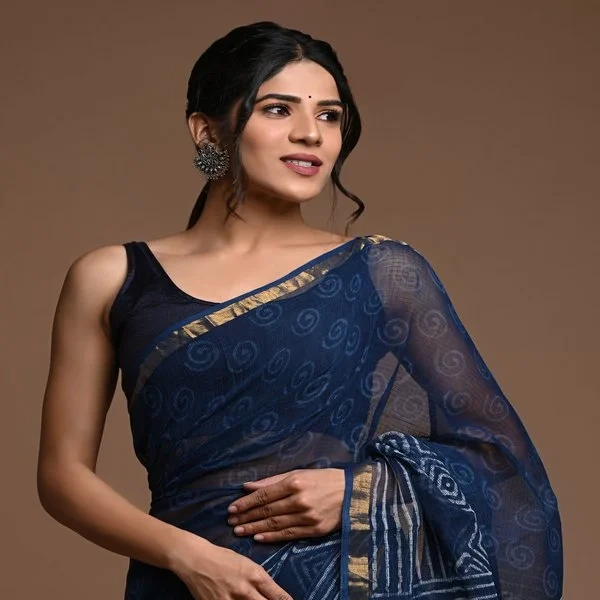
When festive celebrations and summer weddings call for regal elegance without the suffocating weight of heavy brocades, two lightweight handlooms reign supreme: **Chanderi Silk** from the historic heart of Madhya Pradesh, and **Kota Doria** from the royal desert loom clusters of Rajasthan.
While both weaves share gossamer transparency and royal patrons dating back to the Mughal and Rajput eras, their construction, tactile feel, and ideal occasions differ significantly.
Quick Comparison Table
| Feature | Chanderi Silk Saree | Kota Doria Saree |
|---|---|---|
| Geographic Origin | Chanderi, Madhya Pradesh | Kota / Kaithun, Rajasthan |
| Weave Structure | Plain gossamer weave with silk warp & cotton weft | Signature square checkered grid (Khat weave) |
| Surface Finish | Luminous sheen with golden zari borders | Matte, airy, featherlight translucency |
| Drape Behavior | Soft fluid fall with regal structure | Crisp, breezy volume that never clings |
| Ideal Occasions | Diwali, evening receptions, festive dinners | Daytime weddings, haldi, pujas, humid summer soirees |
When to Choose Chanderi Silk
Pick a **Chanderi Silk Saree** when you desire candlelit radiance and festive grandeur. The interwoven raw silk yarn lends the drape a luxurious luster that catches ambient light beautifully, while traditional hand-block Bagru or gold foil prints elevate it into heirloom eveningwear.
When to Choose Kota Doria
Pick a **Kota Doria Saree** when comfort in extreme heat is paramount. The distinctive checkered 'khat' weave creates micro air channels across the entire 6.5-meter drape, ensuring maximum ventilation. Adorned with delicate floral sanganeri prints or vibrant Leheriya and Shibori tie-dye, Kota Doria is the quintessential daytime celebration drape.